Most people associate air pollution with highways, factories, and smoky skylines — but the truth is far more unsettling. The air inside your Austin home can carry dust, allergens, mold spores, volatile chemicals, and microscopic particles that silently affect how you feel, sleep, and breathe. With Americans spending roughly 90 percent of their time indoors, understanding indoor air quality health risks isn’t optional — it’s essential for protecting your family’s well-being. This comprehensive guide breaks down the documented health dangers of unhealthy indoor air, walks through the symptoms you should watch for, identifies who faces the greatest risk, and explains practical steps you can take starting today.
Estimated Reading Time: 4 Minutes
Key Takeaways
- Indoor air can contain 2–5× more pollutants than outdoor air, posing serious health risks to Austin homeowners.
- Common symptoms like headaches, fatigue, and congestion may be caused by poor indoor air quality rather than seasonal allergies.
- Invisible dangers such as radon and carbon monoxide can have fatal consequences without proper detection.
- Children, older adults, pregnant women, and those with asthma or allergies face the highest risk.
- Your HVAC system and ductwork play a central role in determining what you breathe — professional cleaning removes accumulated contaminants.
- Source control, ventilation, and filtration are the three pillars of healthier indoor air.
Understanding Indoor Air Quality Health Risks in Your Home
The term “Sick Building Syndrome” was originally associated with commercial offices, but it applies to residential homes as well. Modern construction in Austin often prioritizes energy efficiency, which means tighter building envelopes, better insulation, and less natural air exchange. While that keeps utility bills lower, it also means pollutants generated inside the home have fewer ways to escape. Cooking fumes, cleaning product vapors, pet dander, and dust particles stay trapped indoors, circulating through your HVAC system hour after hour.
The U.S. Environmental Protection Agency has identified indoor air pollution as one of the top five environmental risks to public health. That ranking surprises many homeowners, yet it reflects a simple reality: most Americans spend roughly 90 percent of their time indoors, and concentrations of certain pollutants can be two to five times higher inside a home than outside. Children and older adults face elevated vulnerability because of developing or declining respiratory and immune systems.
Common Symptoms of Poor Air Quality You Shouldn’t Ignore
Many Austin residents experience poor air quality symptoms without realizing the air in their home is the cause. Eye irritation, a scratchy throat, persistent headaches, dizziness, and chronic fatigue are among the most frequently reported complaints. These symptoms often overlap with seasonal allergies or a lingering cold, which makes them easy to dismiss. The key pattern to watch for is timing: if your symptoms appear or worsen when you are at home and improve after you leave for several hours, your indoor air may be the problem.
Nasal congestion, frequent sneezing, and a general sense of heaviness in the chest are also associated with poor indoor air. According to the EPA, short-term exposure to elevated levels of indoor pollutants can produce noticeable discomfort even in otherwise healthy adults. When multiple family members report similar complaints at similar times, that pattern deserves attention rather than another trip to the pharmacy for allergy medication.
Short-Term Reactions That Mimic Everyday Illness
Short-term reactions to unhealthy indoor air tend to appear quickly and resolve once exposure stops. Burning or watering eyes, a dry cough, mild headaches, and light-headedness are common examples. In many Austin homes, these reactions intensify during months when windows stay closed and the HVAC system runs continuously. Residents may notice that certain rooms feel more uncomfortable than others, especially areas with limited airflow or older ductwork that has not been serviced in years.
These reactions are the body’s early warning system. They indicate that airborne irritants are present at levels high enough to trigger a physical response. Ignoring them does not make them harmless. Instead, it extends the period of exposure and can set the stage for more persistent issues down the road.
The Invisible Dangers: Hidden Indoor Air Quality Dangers
Some of the most serious indoor air quality dangers are completely invisible and odorless. Radon, a naturally occurring radioactive gas, seeps into homes through cracks in foundations and accumulates in enclosed spaces. The National Cancer Institute identifies radon as the second leading cause of lung cancer in the United States, responsible for an estimated 21,000 deaths annually. Austin sits in a region where radon levels vary by neighborhood, making individual home testing the only reliable way to know your exposure level.
Carbon monoxide presents another invisible threat. Produced by incomplete combustion in gas furnaces, water heaters, stoves, and generators, carbon monoxide is a colorless, odorless gas that can cause headaches, confusion, and at high concentrations, death. The U.S. Consumer Product Safety Commission recommends CO detectors on every level of the home and regular inspection of combustion appliances. Beyond gases, biological contaminants such as dust mites and pet dander accumulate inside ductwork over time, continuously recirculating through the HVAC system with every heating or cooling cycle.
How Mold and Humidity Impact Your Respiratory Health
Austin’s subtropical climate brings warm temperatures and elevated humidity levels for much of the year. When moisture enters the HVAC system through condensation, leaky ducts, or a poorly maintained drain pan, it creates an environment where mold can establish itself quickly. Once mold colonies form inside ductwork or on evaporator coils, every airflow cycle distributes spores throughout the home.
The Centers for Disease Control and Prevention has documented that spending time in damp buildings is associated with worsening asthma, allergic rhinitis, and eczema. For Austin households where humidity control is already a challenge, ensuring that the HVAC system is clean and properly sealed becomes especially important. Nonstop Air Duct Cleaning Austin offers professional duct inspection and cleaning services designed to identify moisture-related buildup and remove contaminants before they spread further through the home.
⚠️ Don’t Wait Until Symptoms Get Worse
Over 1,200 Austin homeowners have already trusted Nonstop Air Duct Cleaning Austin to improve their indoor air. Summer demand is rising fast — schedule your free inspection before slots fill up.
A Comparison: Indoor Pollutant Sources and Their Health Effects
| Pollutant Category | Common Indoor Sources | Potential Health Effects |
|---|---|---|
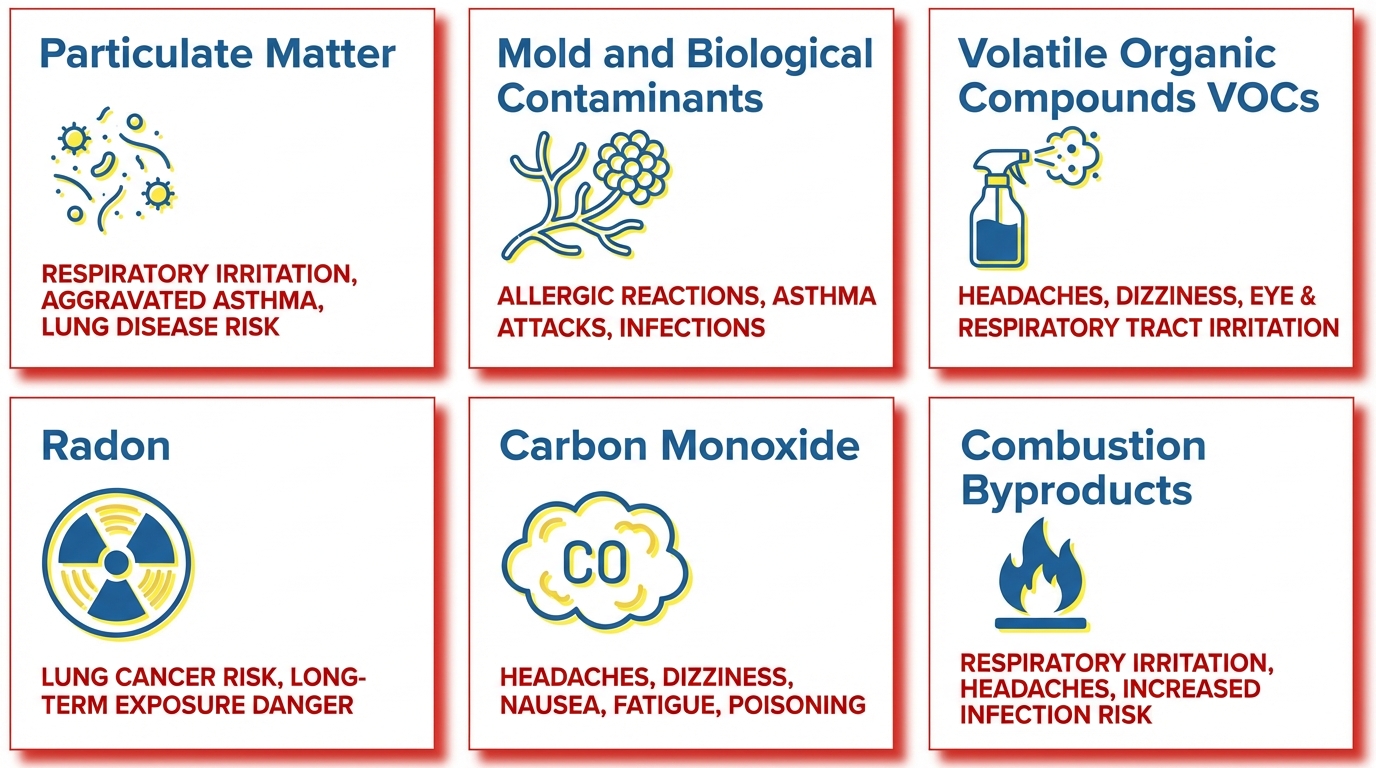
| Particulate Matter (dust, fibers, dander) | Carpets, bedding, pets, dirty air ducts | Eye and throat irritation, aggravated asthma, respiratory infections |
| Mold and Biological Contaminants | Moisture in HVAC systems, bathrooms, basements | Allergic reactions, chronic cough, worsened eczema, sinus issues |
| Volatile Organic Compounds (VOCs) | Paint, cleaning products, new furniture, air fresheners | Headaches, nausea, liver and kidney irritation with prolonged exposure |
| Radon | Soil gas entering through foundation cracks | Lung cancer with long-term exposure |
| Carbon Monoxide | Gas appliances, generators, attached garages | Headaches, confusion, dizziness, fatal poisoning at high levels |
| Combustion Byproducts | Cooking, fireplaces, candles, tobacco smoke | Respiratory irritation, cardiovascular strain, cancer risk |
This table illustrates why indoor air quality is rarely a single-source problem. Most homes have several pollutant categories present simultaneously, and their combined effect determines overall air quality. Regular ventilation, filtration, and professional duct maintenance address multiple categories at once.
Long-Term Air Pollution Health Effects on the Body
When exposure to unhealthy indoor air continues over months or years, the consequences extend well beyond mild discomfort. The EPA has documented that prolonged exposure to indoor pollutants may contribute to chronic respiratory diseases, cardiovascular problems, and certain types of cancer. Fine particulate matter and nitrogen dioxide, both of which can circulate through a home’s ventilation system, are known to aggravate lung tissue and increase the frequency and severity of asthma attacks.
Long-term air pollution health effects are often cumulative and difficult to reverse. Repeated irritation of the airways can lead to chronic bronchitis. Continuous exposure to mold spores can sensitize the immune system, making allergic responses progressively worse over time. For families living in the same home for years, the condition of the HVAC system and ductwork plays a meaningful role in determining what residents breathe every day.
Who Faces the Greatest Risk from Unhealthy Indoor Air?
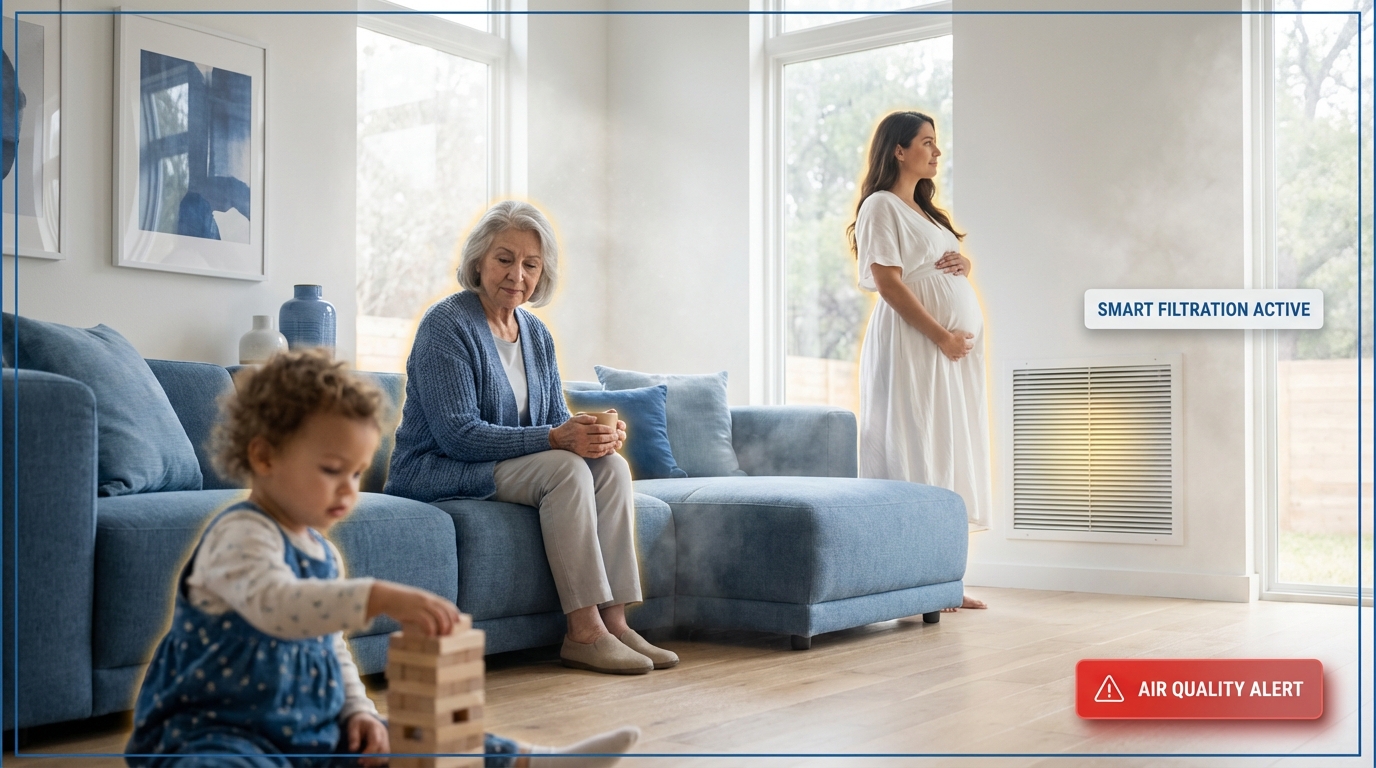
Not everyone reacts to poor indoor air in the same way. Children breathe more air relative to their body weight than adults, and their lungs are still developing, which makes them more susceptible to airborne irritants. Older adults often have reduced lung function and may have underlying conditions such as heart disease or COPD that are worsened by pollutant exposure. Pregnant women face additional concerns because certain airborne substances can affect fetal development.
People with pre-existing asthma, allergies, or compromised immune systems are also at heightened risk. According to the EPA’s Indoor AirPlus program, reducing indoor pollutant levels directly benefits these populations. In Austin, where pollen counts are already high for much of the year, the indoor environment should serve as a refuge rather than another source of respiratory stress.
Can Poor Indoor Air Quality Worsen Asthma and Allergies?
Yes, and this connection is one of the most well-documented in indoor environmental health. Dust mites, pet dander, mold spores, and fine particulate matter are all recognized asthma triggers that accumulate in homes with inadequate ventilation or dirty ductwork. The National Heart, Lung, and Blood Institute recommends reducing allergen levels in the home as a core asthma management strategy, which includes keeping HVAC systems clean and maintaining proper humidity levels.
For Austin residents who notice that allergy or asthma symptoms seem worse indoors, the HVAC system is one of the first places to investigate. When duct interiors have not been cleaned in years, layers of dust, debris, and biological material can build up on interior surfaces. Every time the system cycles on, a portion of that material becomes airborne. Professional duct cleaning removes that accumulated layer, reducing the volume of particles circulating through the home with each air cycle.
Mistake Many Homeowners Make: Relying on Air Fresheners Instead of Addressing the Source
A common mistake is treating the symptom rather than the cause. When a home smells stale or musty, many residents reach for air fresheners, scented candles, or plug-in deodorizers. These products mask odors but do nothing to remove the underlying pollutants. In some cases, they actually add volatile organic compounds to the indoor environment, increasing the total pollutant load rather than reducing it.
The more effective approach is source identification and removal. That means checking for moisture problems, inspecting visible duct registers for dust buildup, replacing HVAC filters on schedule, and having ductwork professionally cleaned when there are signs of contamination. Nonstop Air Duct Cleaning Austin provides thorough duct inspection as part of every service visit, helping homeowners understand what is actually inside their system before any cleaning begins. This diagnostic step ensures that the service addresses real conditions rather than guessing.
⭐⭐⭐⭐⭐ What Austin Homeowners Are Saying
“We had no idea how much dust was trapped inside our ducts. After Nonstop cleaned our system, my daughter’s nighttime coughing stopped within a week. We wish we had done this years ago.”
— Sarah M., South Austin homeowner, verified customer
Is Indoor Air Really More Polluted Than Outdoor Air?
For many Austin homes, the answer is yes. The EPA has stated that indoor air can contain two to five times more pollutants than outdoor air, and in some cases the ratio is significantly higher. The reason comes down to containment: pollutants that are generated indoors or pulled in from outside become concentrated in enclosed spaces, especially when ventilation is limited and the HVAC system recirculates the same air repeatedly.
This fact challenges a widespread assumption. Many people keep their windows closed to avoid outdoor allergens like cedar pollen, believing that indoor air must be cleaner by default. In reality, closing a home without adequate filtration and ventilation can trap pollutants inside and allow them to build up to levels that exceed what is typically found outdoors. Maintaining a clean air distribution system is one of the most practical ways to break that cycle.
How Your HVAC System and Ductwork Influence What You Breathe
Your HVAC system is responsible for moving air through every room in your home. The ductwork functions as the circulatory system, delivering conditioned air and returning it for filtration and reconditioning. When those ducts contain layers of dust, construction debris, pet hair, or moisture-related buildup, a portion of that material enters the air stream every time the blower runs.
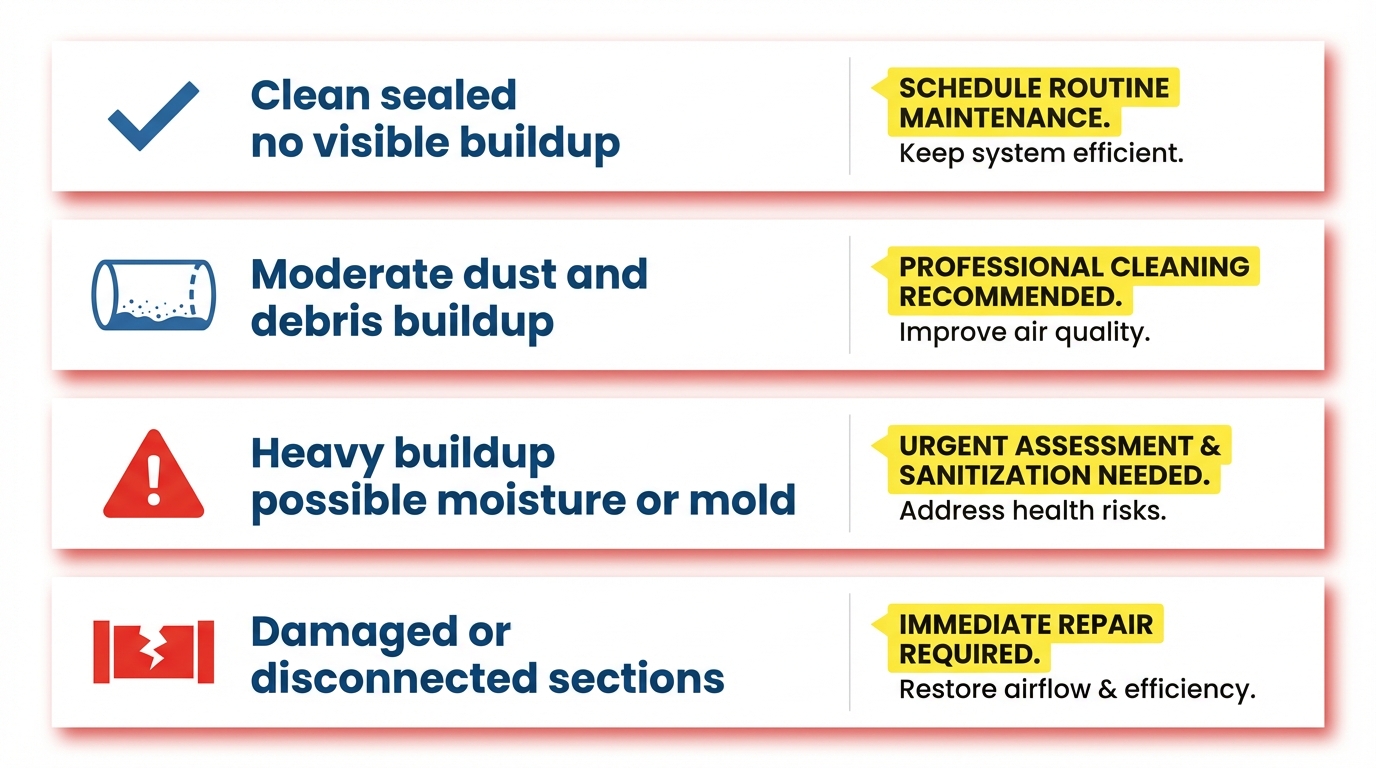
| Ductwork Condition | What Happens Inside the Home | Recommended Action |
|---|---|---|
| Clean, sealed, no visible buildup | Efficient airflow, lower dust levels, consistent comfort | Routine filter changes, periodic inspection |
| Moderate dust and debris buildup | Increased dust on surfaces, mild odors, reduced airflow | Professional duct cleaning and filter upgrade |
| Heavy buildup, possible moisture or mold | Persistent odors, visible dust from vents, allergy flare-ups | Professional cleaning, inspection for leaks, sanitizing if needed |
| Damaged or disconnected sections | Uneven temperatures, energy waste, pollutant entry from unconditioned spaces | Duct repair or replacement, sealing, followed by cleaning |
Nonstop Air Duct Cleaning Austin uses professional-grade equipment to clean duct interiors, remove buildup, and verify airflow performance after service. For homes in Austin where the HVAC system runs for much of the year, periodic professional cleaning supports both better air quality and more efficient system operation.
How to Improve Your Home’s Air Quality Environment
Addressing indoor air quality health risks effectively requires working on three fronts simultaneously: source control, ventilation, and filtration. Source control means identifying and reducing the things that generate pollutants in the first place, such as fixing leaks that encourage mold growth, storing chemicals properly, and avoiding indoor smoking. Ventilation ensures that fresh outdoor air replaces stale indoor air, diluting pollutant concentrations. Filtration captures airborne particles before they recirculate.
For Austin homeowners, practical steps include:
- Replacing HVAC filters every 60 to 90 days (or more often with pets)
- Running exhaust fans during cooking and bathing
- Keeping indoor humidity between 30 and 50 percent
- Scheduling professional duct cleaning when buildup is evident
The American Society of Heating, Refrigerating and Air-Conditioning Engineers (ASHRAE) has documented that improved ventilation rates are associated with better health outcomes, underscoring the importance of a clean, well-maintained air distribution system in every home.
🕐 Limited Availability This Season
Austin’s peak cooling season means HVAC systems are working overtime. Our inspection calendar is filling quickly — secure your spot now and take the first step toward cleaner air at home.
When Professional Service Makes the Biggest Difference
There are specific situations where professional duct and HVAC cleaning provides the most noticeable improvement. Homes that have recently undergone renovation or construction often have elevated levels of drywall dust, sawdust, and debris inside the duct system. Homes with pets, especially multiple pets, accumulate dander and hair in ductwork faster than homes without animals. Properties that have experienced water damage or high humidity events may have moisture-related contamination that requires professional removal.
Nonstop Air Duct Cleaning Austin works with homeowners across the Austin area to address these exact scenarios. The team inspects the duct system, explains what they find, and performs cleaning using equipment designed to reach the full length of each duct run. Because every home is different, the service approach is based on actual conditions rather than a one-size-fits-all process. That practical, condition-based approach helps homeowners get meaningful results without paying for services they do not need.
⭐⭐⭐⭐⭐ Trusted by Austin Families
“After our home renovation, there was a fine layer of dust on everything no matter how often we cleaned. Nonstop showed us what was inside the ducts — it was shocking. The difference after their cleaning was night and day. Highly recommend.”
— David R., Cedar Park, TX, verified customer
Testing Your Indoor Air: What Austin Homeowners Should Know
If symptoms persist or you suspect a specific pollutant, air quality testing can provide clarity. Radon test kits are widely available and relatively inexpensive. Carbon monoxide detectors should be installed in every home and tested regularly. For more comprehensive assessment, professional indoor air quality testing can measure particulate levels, humidity, VOC concentrations, and the presence of mold spores.
Testing is not always necessary as a first step. In many cases, a visual inspection of ductwork, a review of HVAC filter condition, and an honest assessment of household habits provide enough information to take meaningful action. However, when symptoms are severe, when vulnerable household members are affected, or when previous efforts have not resolved the issue, testing helps confirm the source and guides the most effective response.
Frequently Asked Questions About Indoor Air Quality Health Risks
What are the most common symptoms of poor indoor air quality?
The most frequently reported symptoms include headaches, fatigue, eye and throat irritation, nasal congestion, coughing, and dizziness. These symptoms may worsen while at home and improve after spending time outdoors. Persistent or recurring symptoms affecting multiple household members often suggest an indoor air quality issue.
Can dirty air ducts affect your health?
When air ducts contain significant buildup of dust, debris, mold, or biological material, they can contribute to the distribution of airborne particles and allergens throughout the home. This is especially relevant for people with asthma, allergies, or respiratory sensitivity. Professional cleaning removes that buildup and reduces the volume of contaminants entering the living space.
How do I know if the air in my house is unhealthy?
Common indicators include persistent musty or stale odors, visible dust accumulating quickly on surfaces, condensation on windows, mold growth in bathrooms or near vents, and physical symptoms that correlate with time spent indoors. A noticeable improvement in how you feel when away from home is often a meaningful signal.
Who is most at risk from indoor air pollution?
Children, older adults, pregnant women, and individuals with pre-existing conditions such as asthma, allergies, heart disease, or compromised immune systems face the highest risk. These groups tend to be more sensitive to airborne irritants and may experience more severe reactions at lower exposure levels.
Is indoor air really worse than outdoor air?
In many cases, yes. Indoor pollutant concentrations can be two to five times higher than outdoor levels, particularly in homes with limited ventilation, heavy use of chemical products, or HVAC systems that recirculate contaminated air. Proper filtration, ventilation, and duct maintenance help bring indoor air quality closer to healthy levels.
How often should air ducts be cleaned?
There is no single schedule that applies to every home. Factors that influence cleaning frequency include the presence of pets, household allergy or asthma conditions, recent construction or renovation, visible dust at vent registers, and overall HVAC system age. A professional inspection can determine whether cleaning is currently needed based on actual duct conditions.
Ready to Find Out What Is Circulating Through Your Home?
If your home feels dusty, your allergies seem worse indoors, or you have been wondering whether your HVAC system is contributing to the problem, a professional duct inspection can provide clear answers. Nonstop Air Duct Cleaning Austin helps homeowners across the Austin area understand their indoor air conditions and take practical steps toward cleaner, healthier airflow.
Take Control of Your Indoor Air Today
Join the 1,200+ Austin homeowners who have already improved their air quality with Nonstop Air Duct Cleaning Austin. Free estimates are available — but summer appointments are limited.

About the Author
Nonstop Air Duct Cleaning Austin Editorial Team
The Nonstop Air Duct Cleaning Austin team brings over a decade of hands-on experience in residential HVAC duct inspection, cleaning, and indoor air quality improvement throughout the greater Austin area. Every article is reviewed by certified technicians who work in Austin homes daily, ensuring that the guidance we share reflects real-world conditions — not just theory. Our mission is to help Austin families breathe cleaner air by providing honest, expert-backed information alongside professional-grade service.