Your clothes dryer runs quietly in the background of daily life, handling load after load without much thought. But behind that convenience, lint accumulates, airflow weakens, and heat builds up in ways most Austin homeowners never notice until something goes wrong. According to the U.S. Fire Administration, failure to clean the dryer is the leading factor contributing to residential clothes dryer fires. The good news is that most dryer fires are entirely preventable with the right habits, awareness, and professional maintenance.
Estimated reading time: 14 minutes
Key Takeaways
- Lint buildup in the dryer and exhaust vent is the leading cause of residential dryer fires, and cleaning the lint trap before every load is the simplest prevention step.
- Professional dryer vent cleaning at least once a year removes hidden lint deposits that household tools cannot reach.
- Warning signs like longer drying times, a hot dryer exterior, and burning smells indicate restricted airflow that demands immediate attention.
- Rigid metal ducting is the safest vent material, while vinyl and thin plastic hoses significantly increase fire risk.
- Never run the dryer when no one is home or while sleeping, and avoid drying items that have contacted flammable substances.
- High-use households, homes with pets, and dryers with long or complex vent runs should schedule professional inspections every six months.
- Understanding the Danger: Why Dryer Fires Happen
- Is Dryer Lint Really a Fire Hazard?
- How Often Should You Clean the Lint Trap?
- How Often Should a Dryer Vent Be Professionally Cleaned?
- When Yearly Cleaning May Not Be Enough
- Can a Clogged Dryer Vent Cause a Fire?
- Warning Signs Your Dryer May Be a Fire Hazard
- Should You Leave the House With the Dryer Running?
- What Should You Never Put in a Dryer?
- Can Overloading a Dryer Increase Fire Risk?
- What Type of Dryer Vent Material Is Safest?
- Keeping the Area Around Your Dryer Clear
- A Practical Comparison: DIY Checks vs. Professional Dryer Vent Service
- Frequently Asked Questions About Dryer Fire Prevention
- Ready to Protect Your Austin Home From a Preventable Dryer Fire?
- What Our Customers Say
- Find Us
Understanding the Danger: Why Dryer Fires Happen
Dryer fire prevention starts with understanding the root cause. Every time your dryer runs, it generates heat and pushes moisture-laden air through a vent system. That process also moves tiny fabric fibers — lint — through the machine and into the exhaust path. Over time, lint collects not only in the filter but also inside the dryer cabinet, along the exhaust duct, and near the exterior vent cap. When airflow becomes restricted, heat has nowhere to go. Temperatures rise inside the appliance, and because lint is highly flammable, even a small accumulation near a heat source can ignite quickly.
The lint fire hazard extends beyond the screen you see when you open the dryer door. Lint particles pass through the filter mesh and settle in duct joints, corrugated tubing, and around the heating element. A clogged dryer vent forces the appliance to work harder, overheat, and run longer cycles — all of which compound the dryer vent fire risk. Mechanical failures such as a stuck cycling thermostat or a worn drum seal can also contribute, but in most documented cases the primary trigger is accumulated lint combined with restricted airflow.
Is Dryer Lint Really a Fire Hazard?
Many homeowners underestimate how flammable dryer lint actually is. Lint is essentially a collection of loose, dry textile fibers with a very high surface-area-to-mass ratio. That means it catches fire easily and burns fast. The U.S. Consumer Product Safety Commission has published technical research confirming that lint inside the dryer cabinet and exhaust system can reach ignition temperature when airflow is blocked and heat accumulates beyond normal operating levels.
The misconception that cleaning the visible lint screen eliminates the risk is widespread. In reality, a portion of lint passes through the screen during every cycle. It travels into the duct, settles in bends and joints, and gradually narrows the exhaust passage. In Austin homes where dryers run frequently — especially during humid seasons when laundry piles grow — this buildup can happen faster than most people expect.
Lint has a very high surface-area-to-mass ratio, which means it ignites at relatively low temperatures. Even a thin layer of lint near the dryer’s heating element can become a fire hazard if airflow is restricted.
How Often Should You Clean the Lint Trap?
The answer is simple: every single load. Removing lint from the filter before or after each drying cycle is one of the easiest and most effective dryer fire prevention tips you can follow. Even a thin layer of lint on the screen reduces airflow enough to raise operating temperatures and extend drying time. The Fairfax County Fire and Rescue Department includes this step as a core recommendation in its public safety guidance.
Beyond the per-load cleaning, consider washing the lint screen with warm water and a soft brush once a month. Fabric softener sheets and liquid softeners leave an invisible residue on the mesh that progressively blocks airflow even when the screen looks clean. Rinsing it periodically restores full air passage and helps the dryer operate at the temperatures it was designed for.
Ready to improve your indoor air quality and dryer safety? Contact Nonstop Air Duct Cleaning Austin today for a professional vent inspection.
How Often Should a Dryer Vent Be Professionally Cleaned?
For most Austin households, a thorough dryer vent cleaning at least once a year is a sound baseline. However, the right frequency depends on several factors specific to your home and usage patterns. A family of five running the dryer daily will accumulate lint far faster than a couple doing laundry twice a week. Homes with pets shed extra fibers into every load, and certain fabrics — towels, fleece, cotton — generate significantly more lint than others.
Professional cleaning addresses the sections of the exhaust system that a household vacuum cannot reach. Lint collects in hidden duct runs behind walls, in elbows where the duct changes direction, and inside the vent cap assembly on the exterior of the house. Nonstop Air Duct Cleaning Austin provides thorough inspection and cleaning of the full vent path, from the back of the dryer to the outside termination point, helping Austin homeowners prevent dryer fires at home with confidence. If your home has a long duct run or multiple turns, you can learn more about professional air duct cleaning services and how they help maintain safe airflow year-round.
When Yearly Cleaning May Not Be Enough
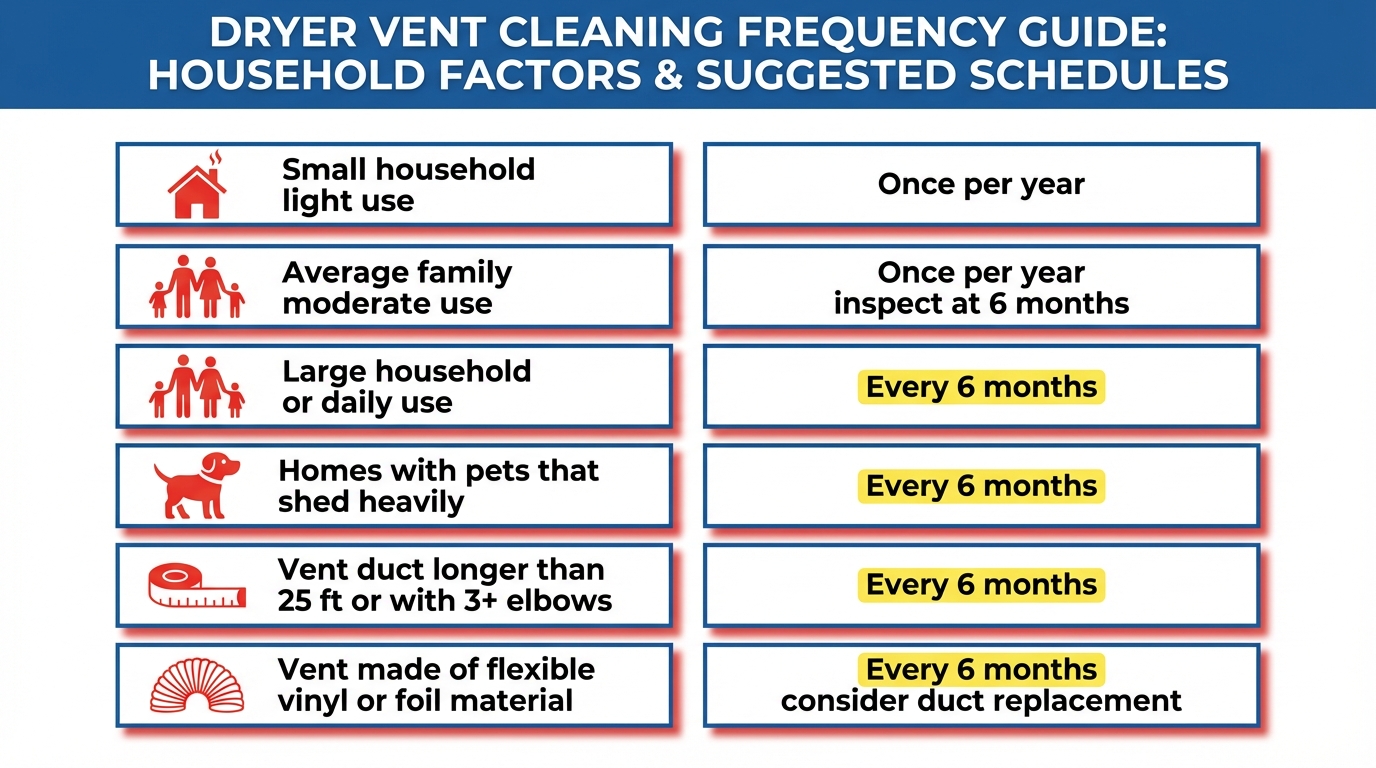
Certain conditions push lint accumulation well beyond the norm. If your dryer vent duct is longer than 25 feet or includes more than two 90-degree elbows, airflow is naturally slower and lint settles faster. Daily dryer use, large households, homes with shedding pets, and heavy-lint fabrics like bath towels all shorten the window between safe operation and hazardous buildup. In these situations, scheduling a professional inspection every six months is a practical step that many Austin homeowners find worthwhile — not only for fire safety but also for dryer efficiency and lower energy bills.
| Household Factor | Suggested Cleaning Frequency |
|---|---|
| Small household, light use (1-3 loads per week) | Once per year |
| Average family, moderate use (4-7 loads per week) | Once per year, inspect at 6 months |
| Large household or daily use (8+ loads per week) | Every 6 months |
| Homes with pets that shed heavily | Every 6 months |
| Vent duct longer than 25 ft or with 3+ elbows | Every 6 months |
| Vent made of flexible vinyl or foil material | Every 6 months, consider duct replacement |
Can a Clogged Dryer Vent Cause a Fire?
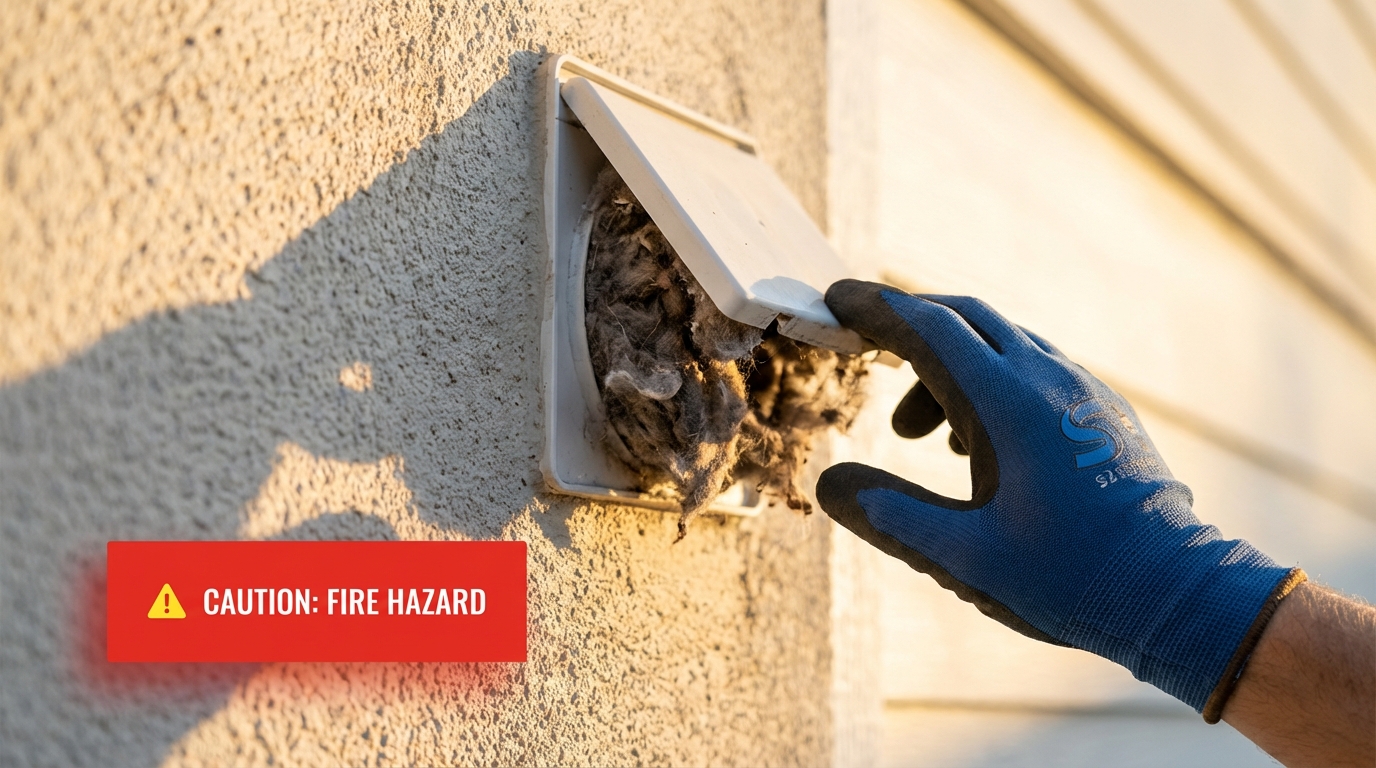
Yes, and it is one of the most common contributing factors documented in dryer fire investigations. When the exhaust vent is obstructed, the dryer cannot expel hot, moist air efficiently. That trapped heat raises the internal temperature of the appliance. At the same time, moisture that cannot escape creates a damp environment inside the duct where lint sticks to surfaces more easily, further narrowing the passage. The cycle compounds on itself — less airflow leads to more heat, which leads to more lint retention, which leads to even less airflow.
A completely blocked vent can force exhaust gases back into the laundry area, raise humidity in the room, and push the dryer’s thermal safety mechanisms to their limits. If a high-limit thermostat fails or has been bypassed, there is little left to prevent ignition. This is why dryer vent fire risk is closely tied to maintenance habits rather than the age or brand of the appliance itself.
Step outside while your dryer is running and check the exterior vent flap. If it barely moves or produces almost no airflow, your exhaust duct may be obstructed and should be inspected promptly.
Warning Signs Your Dryer May Be a Fire Hazard
Recognizing early red flags gives you time to act before a dangerous situation develops. Research published by the U.S. Consumer Product Safety Commission identifies several indicators that a dryer’s exhaust system is not functioning properly. Pay attention to these signals in your Austin home, especially during high-use seasons.
Clothes that remain damp or take noticeably longer than one full cycle to dry are often the first clue. The top or sides of the dryer feeling unusually hot to the touch during operation is another. A burning or musty smell in the laundry room suggests lint is overheating or moisture is trapped in the system. If you step outside and notice that the exterior vent flap barely moves or produces almost no airflow while the dryer is running, the exhaust path is likely obstructed. Visible lint collecting around the dryer opening or on nearby surfaces also points to restricted venting.
If you notice any combination of these warning signs, do not ignore them. Taking action early — whether by cleaning the lint trap more thoroughly, checking the exterior vent, or scheduling a professional inspection — can prevent a small airflow issue from becoming a serious hazard. If the symptoms are persistent or worsening, contact a local specialist immediately for a professional evaluation.
Should You Leave the House With the Dryer Running?
This is one of the most common questions Austin homeowners ask, and the answer from fire safety professionals is consistent: avoid running the dryer when no one is home, and do not run it while you sleep. If a mechanical failure occurs or lint ignites while the house is empty, there is no one present to detect smoke, smell burning, or respond before conditions escalate. The same caution applies to overnight operation. Many residential dryer fires occur during hours when occupants are asleep and detection is delayed.
This does not mean you need to stand next to the dryer for every cycle. It simply means the dryer should operate during waking hours when at least one person is in the home and able to notice an unusual smell, sound, or temperature change. Building this habit into your routine is one of the simplest dryer fire prevention tips available — and it costs nothing.
What Should You Never Put in a Dryer?
Certain items create fire risk that goes beyond normal lint accumulation. Fabrics or clothing that have been in contact with flammable substances — gasoline, cooking oil, alcohol, certain cleaning solvents, or stain removers — should never be placed in a dryer, even after washing. Residual chemicals can remain in the fibers and ignite when exposed to the dryer’s heat. If in doubt, air-dry the item instead.
Items with rubber backing, foam padding, or plastic components can also pose a problem. Rubber bath mats, some athletic gear, and certain insulated garments may not withstand dryer temperatures safely. Always check the care label. Additionally, oversized items like comforters or heavy blankets that exceed the dryer’s rated capacity can block airflow inside the drum, mimicking the conditions of an overloaded machine and raising internal temperatures.
Can Overloading a Dryer Increase Fire Risk?
Overloading is one of the most overlooked dryer fire safety issues. When the drum is packed too tightly, hot air cannot circulate evenly around the clothing. Wet items near the center take much longer to dry, which forces the dryer to run additional cycles. The heating element works harder, the motor draws more current, and the exhaust system carries a heavier load of moisture and lint. All of these factors increase the chance of overheating.
A good rule of thumb is to fill the drum only about three-quarters full. This allows enough room for clothes to tumble freely, which improves both drying efficiency and airflow. Smaller, well-sorted loads dry faster, use less energy, and place less strain on the entire system — including the vent duct.
Have questions about dryer vent safety or air duct maintenance? Our Austin team is here to help.
What Type of Dryer Vent Material Is Safest?
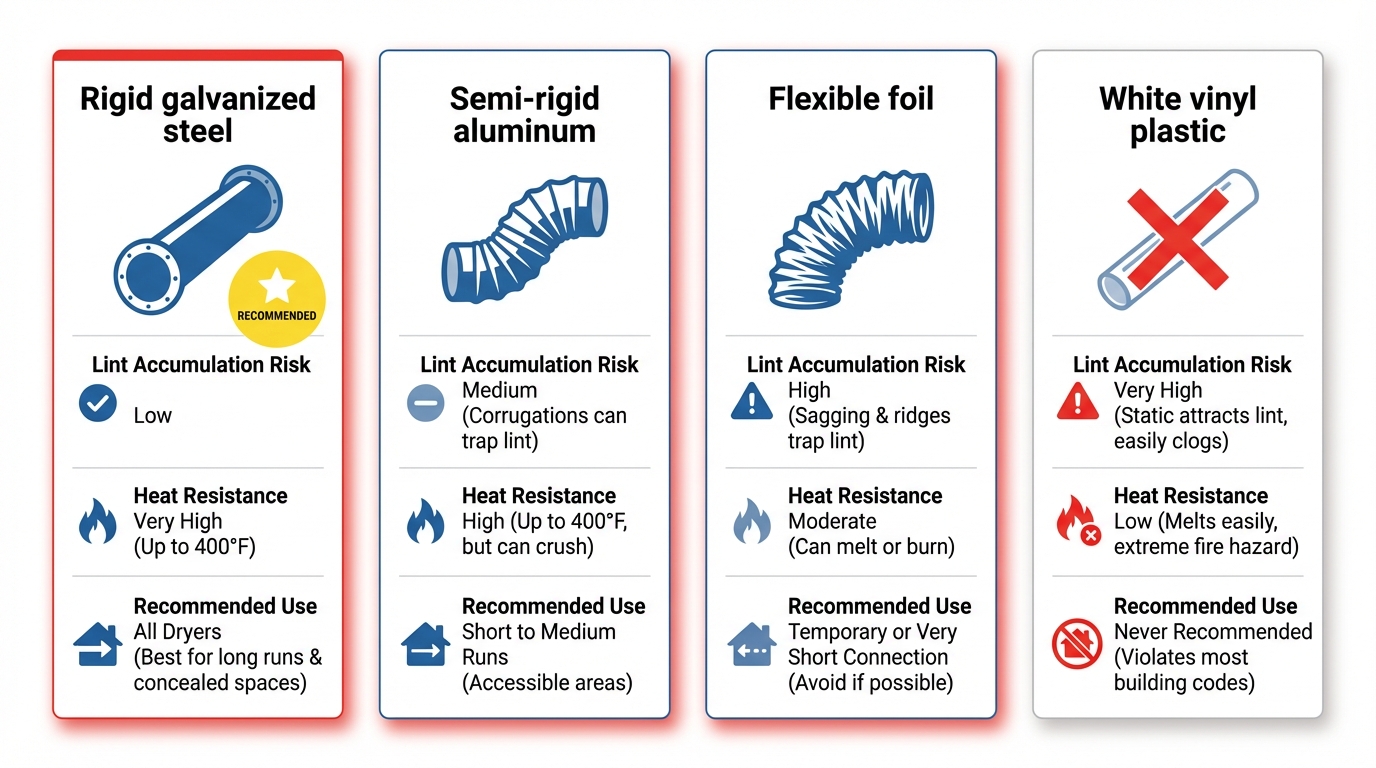
Not all vent ducts are created equal, and the material you use matters for both performance and safety. The U.S. Department of Energy warns against white vinyl or thin plastic flexible hoses, which can sag, kink, and trap lint in their ridges. These materials also degrade over time and may not withstand the heat generated during normal dryer operation.
Rigid metal ducting is the preferred choice among fire safety professionals and building codes in many jurisdictions. It maintains a smooth interior surface that minimizes lint accumulation, supports consistent airflow, and resists heat far better than flexible alternatives. Semi-rigid aluminum duct is an acceptable middle ground for short runs or tight spaces, but rigid galvanized steel remains the gold standard for longer installations.
| Vent Material | Lint Accumulation Risk | Heat Resistance | Recommended Use |
|---|---|---|---|
| Rigid galvanized steel | Low | High | Best for all installations |
| Semi-rigid aluminum | Low to moderate | Moderate to high | Acceptable for short runs |
| Flexible foil | Moderate to high | Moderate | Transition piece only |
| White vinyl / plastic | High | Low | Not recommended — fire risk |
If your Austin home currently uses a vinyl or thin foil duct, replacing it with rigid metal is one of the most impactful upgrades you can make for dryer fire safety. Nonstop Air Duct Cleaning Austin can assess your current vent setup during a routine cleaning visit and advise on whether a material upgrade would improve both safety and dryer performance. Learn more about our air duct installation services for professional duct upgrades.
If you are unsure what material your dryer vent duct is made of, pull the dryer away from the wall and inspect the connection. Vinyl hoses are typically white and flexible, while rigid metal ducts are silver and hold their shape. If you find vinyl, consider scheduling a replacement.
Keeping the Area Around Your Dryer Clear
The space surrounding your dryer is part of the fire prevention equation. Laundry baskets, cleaning chemicals, cardboard boxes, and stacks of clothing placed near the dryer can restrict airflow around the appliance and, in a worst-case scenario, serve as fuel if overheating occurs. Chemical products are particularly risky because fumes from solvents or aerosol cans can be drawn into the dryer’s air intake.
Make it a habit to keep a clear zone of at least a few inches on all sides of the dryer. Ensure the back of the machine is not pressed tightly against the wall, which can crimp the vent connection and reduce exhaust flow. A tidy, well-ventilated laundry area supports safer operation and makes it easier to spot potential issues early.
A Practical Comparison: DIY Checks vs. Professional Dryer Vent Service
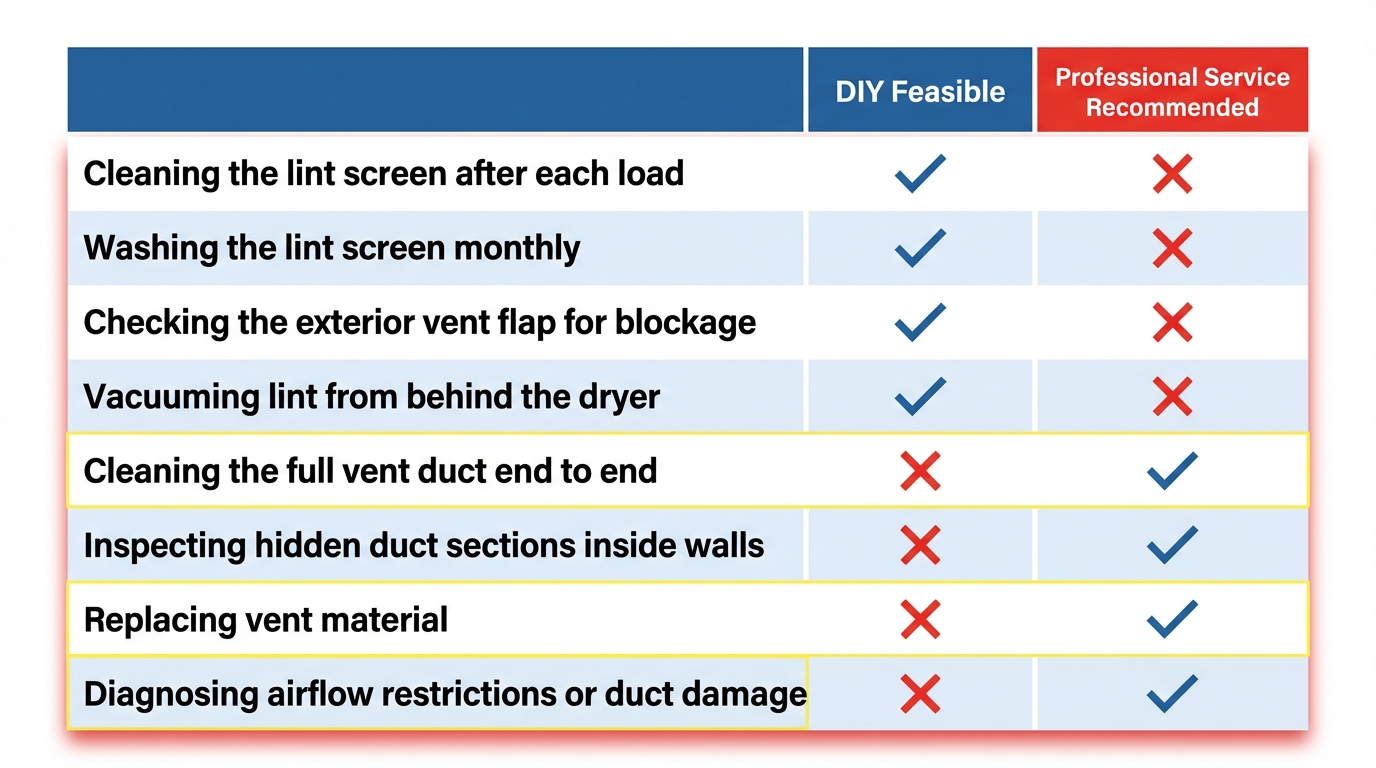
Some maintenance tasks are well within a homeowner’s ability, while others require professional equipment and experience. Understanding the boundary helps you stay safe without overspending or under-maintaining your system.
| Task | DIY Feasible? | Professional Service Recommended? |
|---|---|---|
| Cleaning the lint screen after each load | Yes | No |
| Washing the lint screen monthly | Yes | No |
| Checking the exterior vent flap for blockage | Yes | No |
| Vacuuming lint from behind the dryer | Yes, with care | Helpful if access is limited |
| Cleaning the full vent duct end to end | Difficult without proper tools | Yes — recommended annually |
| Inspecting hidden duct sections inside walls | No | Yes |
| Replacing vent material (vinyl to rigid metal) | Possible for short runs | Yes for longer or complex runs |
| Diagnosing airflow restrictions or duct damage | No | Yes |
Nonstop Air Duct Cleaning Austin uses professional-grade rotary brush systems and high-powered vacuums designed to clear lint from the entire length of the duct, including sections hidden behind drywall or routed through attic spaces. This level of thoroughness is difficult to replicate with consumer tools and is one of the practical advantages of working with a local, experienced team. For homes with complex HVAC systems, our HVAC system cleaning service provides a comprehensive approach to whole-home air quality.
Ready to Protect Your Austin Home From a Preventable Dryer Fire?
If your dryer has been taking longer to dry clothes, running hotter than usual, or you cannot remember the last time the full vent duct was inspected, now is a practical time to take action. Nonstop Air Duct Cleaning Austin helps Austin homeowners identify and clear lint buildup throughout the entire exhaust system — reducing fire risk, improving dryer performance, and supporting a safer home. We serve homeowners across Austin, Round Rock, Cedar Park, San Marcos, Georgetown, Pflugerville, Kyle, Leander, Bastrop, Buda, and surrounding communities in Travis, Williamson, and Hays counties.
Have questions or want to schedule a professional dryer vent inspection? Reach out to Nonstop Air Duct Cleaning Austin to request a free estimate and find out how straightforward proper dryer vent maintenance can be. You can also explore our full range of services including air duct maintenance, air quality testing, and air duct video inspection to keep your home safe and comfortable year-round.
Breathe easier at home. Schedule your dryer vent inspection or air duct service in Austin today.
Frequently Asked Questions About Dryer Fire Prevention
The U.S. Fire Administration estimates approximately 2,900 residential clothes dryer fires per year, resulting in deaths, injuries, and millions of dollars in property damage. The leading cause in the majority of these incidents is failure to clean the dryer and its exhaust system.
Both types carry fire risk when lint accumulates and airflow is restricted. Gas dryers introduce the additional concern of carbon monoxide exposure if the vent is blocked, because exhaust gases that should vent outdoors may instead back up into the living space. Proper venting is critical for both types, but gas dryer owners should be especially attentive to vent maintenance.
Stop the dryer immediately, unplug it or turn off the circuit breaker, and do not restart it until you have identified the source. Check the lint trap and the visible portion of the vent duct. If the smell persists or you cannot identify the cause, contact a professional for an inspection before using the dryer again.
Dryer sheets themselves are not a significant fire risk during normal use. However, the waxy residue they leave on the lint screen can reduce airflow over time. If you use dryer sheets regularly, washing the lint screen with warm soapy water once a month helps maintain proper air passage and prevents gradual buildup that could contribute to overheating.
Most dryer manufacturers specify a maximum equivalent vent length in the installation manual. Each 90-degree elbow typically reduces the effective allowable length by about five feet. If your dryer consistently takes too long to dry clothes even with a clean lint screen, duct length or routing may be part of the problem. A professional vent inspection can measure actual airflow and recommend adjustments.
Yes. A clean, unobstructed vent allows the dryer to operate at its designed airflow rate, which means clothes dry faster and the machine runs fewer or shorter cycles. Many Austin homeowners notice a measurable improvement in drying time and a reduction in energy use after a professional vent cleaning.
A household vacuum can remove lint from the area directly behind the dryer and the first few inches of the duct connection. However, it typically cannot reach lint deposits deep inside the duct, around bends, or near the exterior vent cap. For a full end-to-end cleaning, professional equipment such as rotary brush systems and high-powered vacuums is recommended.
Rigid galvanized steel ducting is considered the safest option by fire safety professionals. Its smooth interior surface minimizes lint accumulation, and it handles high temperatures far better than flexible vinyl or thin foil alternatives. Semi-rigid aluminum duct is an acceptable option for short runs or tight spaces.
What Our Customers Say
Find Us
